For curious kids, a good gift can turn an ordinary afternoon into a chance to experiment, observe, or build. These seven ideas pair science-themed play with useful tools for drawing and learning.
The selection ranges from toddler-friendly magnetic play to projects for older children. Consider the child’s age, interests, and how much adult participation the activity may need.
7 Gift Ideas for Kids Who Love Science
Light-up Crystal Growing Kit for Kids

- Grow red, blue, and clear crystals, then display them on the light-up stand.
- The kit includes an illustrated guide about how crystals form.
- Includes three growing cups and a USB-powered LED display.
Best Gift For: A hands-on science gift for kids who enjoy growing and displaying crystals.

GeoSafari My First Microscope
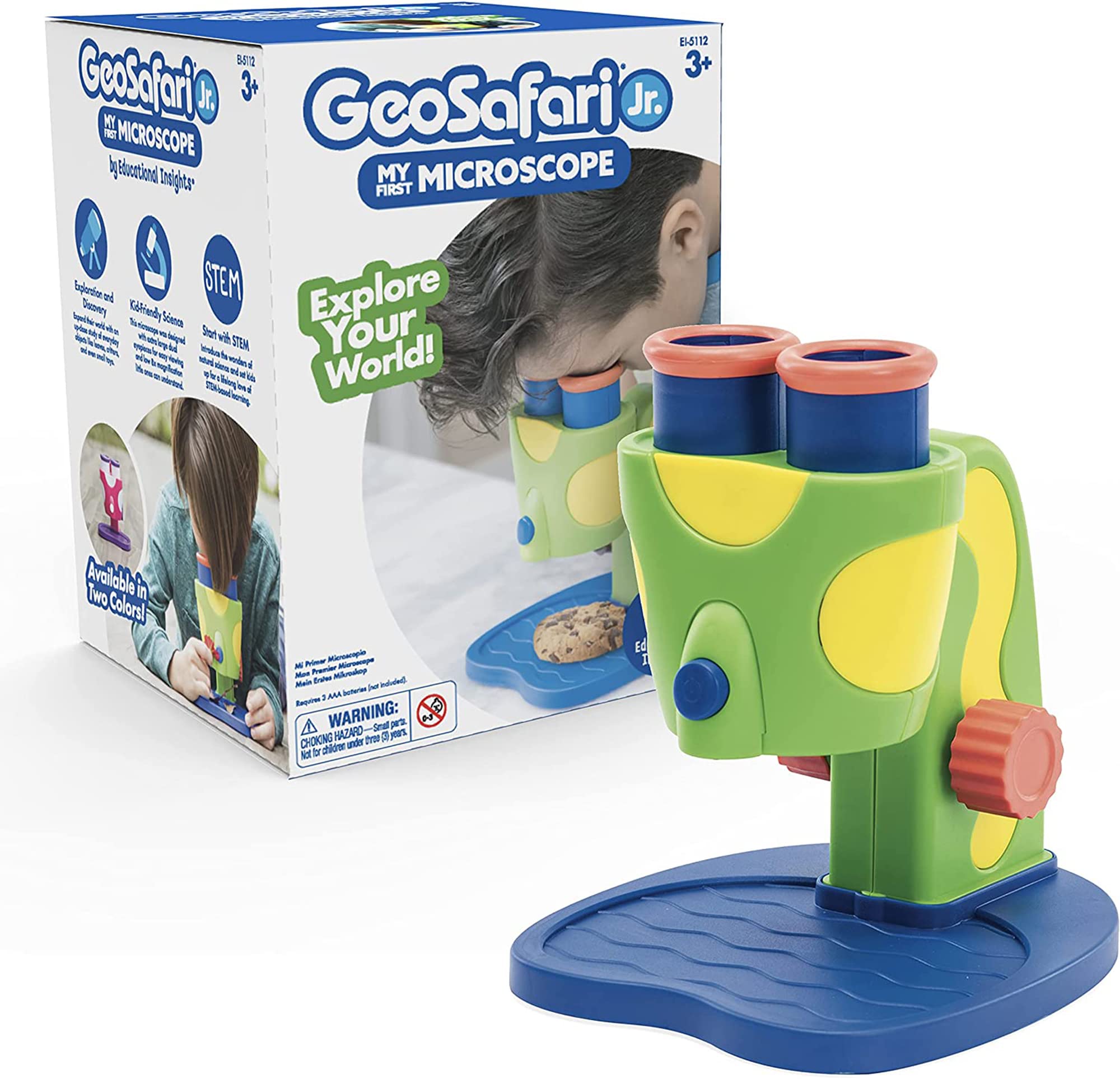
- Large eyepieces let children look through the microscope without closing one eye.
- The kit includes prepared slides with storage.
- An overhead LED light illuminates the sample tray.
Best Gift For: A young child ready to explore prepared slides and take a first look at microscopy.
1-2-3 Build It Robot Factory

- Children can make their own imaginative robot creations.
- The activity supports early engineering and critical-thinking skills.
- The pieces are designed for little hands to handle.
Best Gift For: A toddler who enjoys assembling robot creations and practicing early building skills.
SmartMax My First Dinosaurs Magnetic Building Set
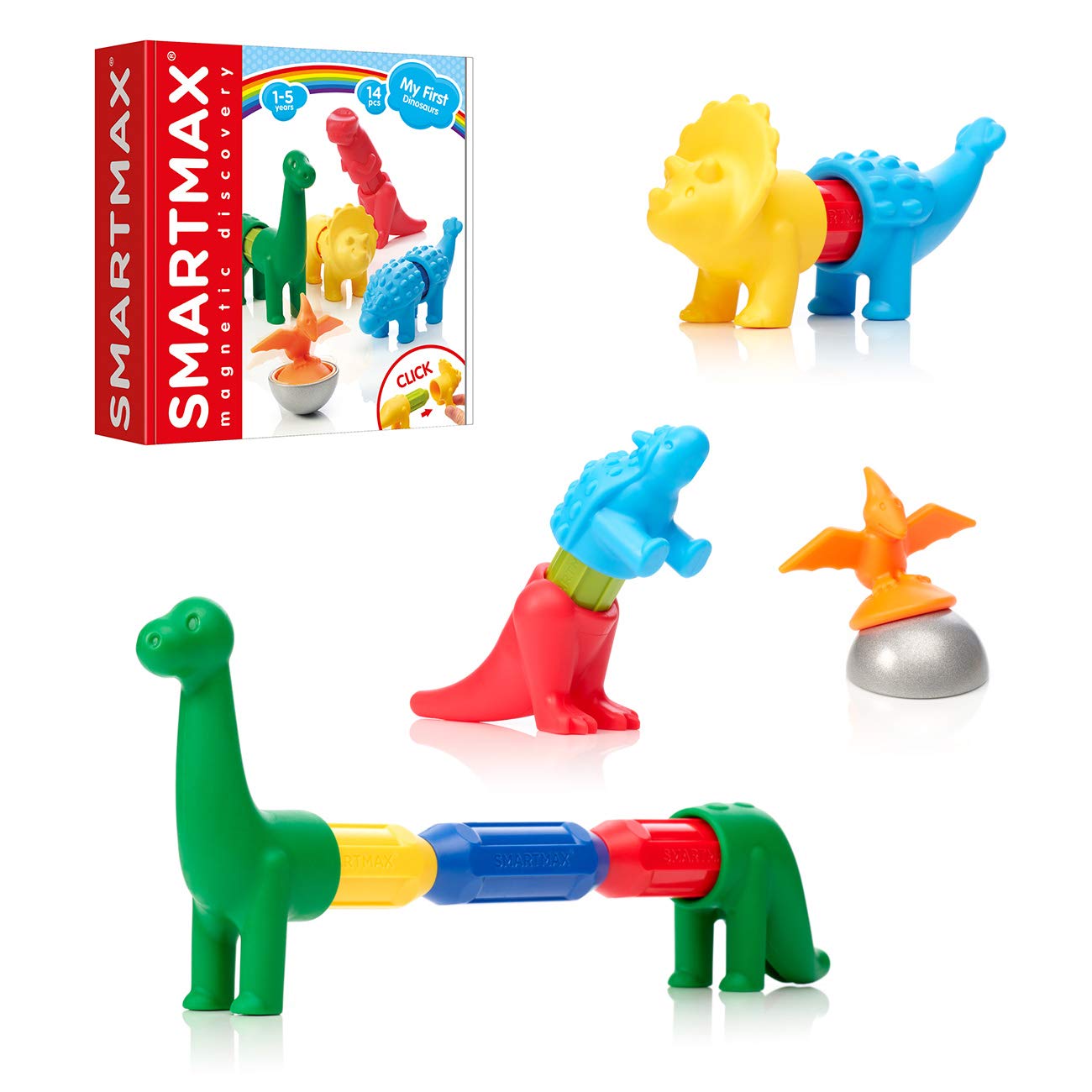
- Build dinosaur figures or mix and match pieces for new creations.
- Clicking magnetic pieces together introduces early magnetism and engineering.
- SmartMax sets can be combined for expanded building play.
Best Gift For: A young dinosaur enthusiast who likes magnetic building and mixing up creations.
Minute Math Electronic Flash Card

- Practice addition, subtraction, multiplication, and division.
- One-minute challenges make practice into a timed game.
- A silent mode suits quiet practice away from home.
Best Gift For: A student who wants a compact way to practice math during quiet moments or travel.
Whitelines Graph Notebooks, 3-Pack

- The three-pack contains graph notebooks with 70 sheets each.
- The paper uses a light gray tint.
- The app can remove the page background from writing or drawings.
Best Gift For: A student who likes recording observations, diagrams, or notes in a notebook.
U.S. Art Supply Sketch Books, 2-Pack
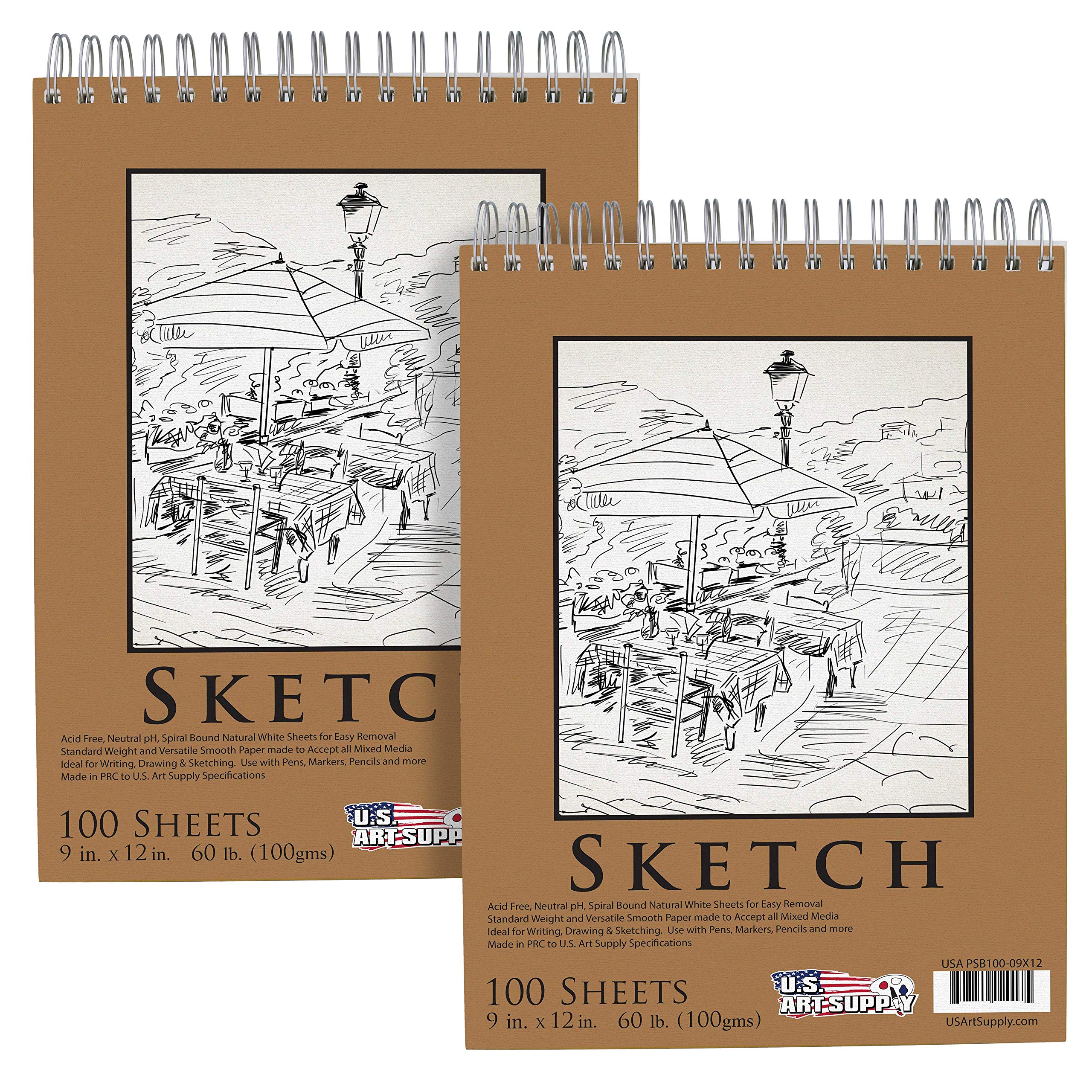
- The two sketch pads provide 200 sheets in total.
- Acid-free drawing paper works with many dry media.
- Top spiral binding makes pages easy to turn.
Best Gift For: A young science fan who likes drawing observations, diagrams, or ideas by hand.
Choosing gifts for kids who love science under 100
For gifts for kids who love science under 100, start with the kind of activity that already holds a child’s attention. A child who watches bugs or asks how things grow may enjoy observing or growing something; a child who likes making things may prefer magnetic pieces or a robot build.
Age and confidence matter as much as the topic. A very young child may need simple pieces and an adult nearby, while an older child may welcome a project that takes time and patience.
Read the age guidance and instructions before choosing.
Think about where the gift will be used. A tabletop project suits a family ready to set aside a work area, while a compact practice activity or notebook can fit waiting rooms and car rides.
Consider cleanup and storage, too.
Balance the budget with the whole activity
Set a comfortable spending range, then compare what the gift actually lets the child do. A kit with materials and instructions may be ready for a shared activity, while a notebook or drawing pad is a useful companion that depends on supplies the family may already have.
Some educational toys need batteries or materials beyond what comes in the box. Check the included components and current product details before buying, so you know whether the gift can be used right away or needs a small addition.
When comparing gifts for kids who love science under 100, include the likely extras in your budget. A modest tool with a few compatible add-ons can be a thoughtful choice, but only if those add-ons are easy to find and suit the recipient.
Personalize gifts for kids who love science under 100
For gifts for kids who love science under 100, connect the activity to a question the child already asks. Pair a building gift with a note inviting them to invent a creature, or give a notebook with a prompt to sketch a surprising shape they notice outdoors.
A little presentation can make a practical science gift feel personal. Wrap reusable tools in a sturdy box the child can use for storing projects, or include a handwritten card naming one observation or experiment to try together.
Keep the message specific to the child’s interests.
If you are giving to a classroom or sibling group, think about sharing and turn-taking. Choose an activity that can be enjoyed together or provide each child with their own place to record observations.
Check dimensions and compatibility where other sets or supplies are involved.
Match the gift to the child’s routine
A useful gift fits the child’s attention span and the household’s schedule. Some projects are rewarding when an adult can join in; others work well as short independent practice.
Ask a caregiver whether the child has a quiet place to use the gift and whether supervision is needed.
For a child who moves between home and school, consider portability, storage, and whether the activity can be paused and resumed. A gift that can stay organized is more likely to remain inviting after the first use.
Check product dimensions before choosing a storage spot.
Interests change quickly, so look for a clear link to what the child enjoys now: dinosaurs, making things, observing details, or keeping notes. You do not need to turn a gift into a lesson.
Curiosity and room to play can be enough.
Last-minute science gift planning
If time is short, choose a gift with a clear purpose and instructions that a caregiver can quickly review. Check current product details, age guidance, what is included, and whether batteries or other supplies are needed before placing an order.
Confirm the child’s preferred color or theme when options are available, then check compatibility with tools or sets they already own. For a last-minute purchase, review the delivery estimate at checkout rather than assuming it will arrive by a particular date.
A thoughtful card can help a gift feel complete even when you have little time to prepare. Mention why you chose it and suggest a simple first step, such as drawing an observation or building an original creation.
Keep the invitation flexible so the child can explore at their own pace.