Science gifts can turn curiosity into an activity, whether that means growing crystals, building a robot, or examining tiny details under a screen.
These six ideas span playful projects and useful tools for reading, recording, and exploring. Consider the recipient’s age and the kind of science they enjoy before choosing.
6 Christmas Gift Ideas for Science Lovers
Light-Up Crystal Growing Kit

- Grow red, blue, and clear crystals, then display them on the included light-up stand.
- The LED display can illuminate the finished crystals for showing them off.
- The illustrated guide explains how crystals form as children follow the activity.
Best Gift For: A young science fan who would enjoy growing and displaying crystals.

TOMLOV DM9B 7-Inch Digital Microscope
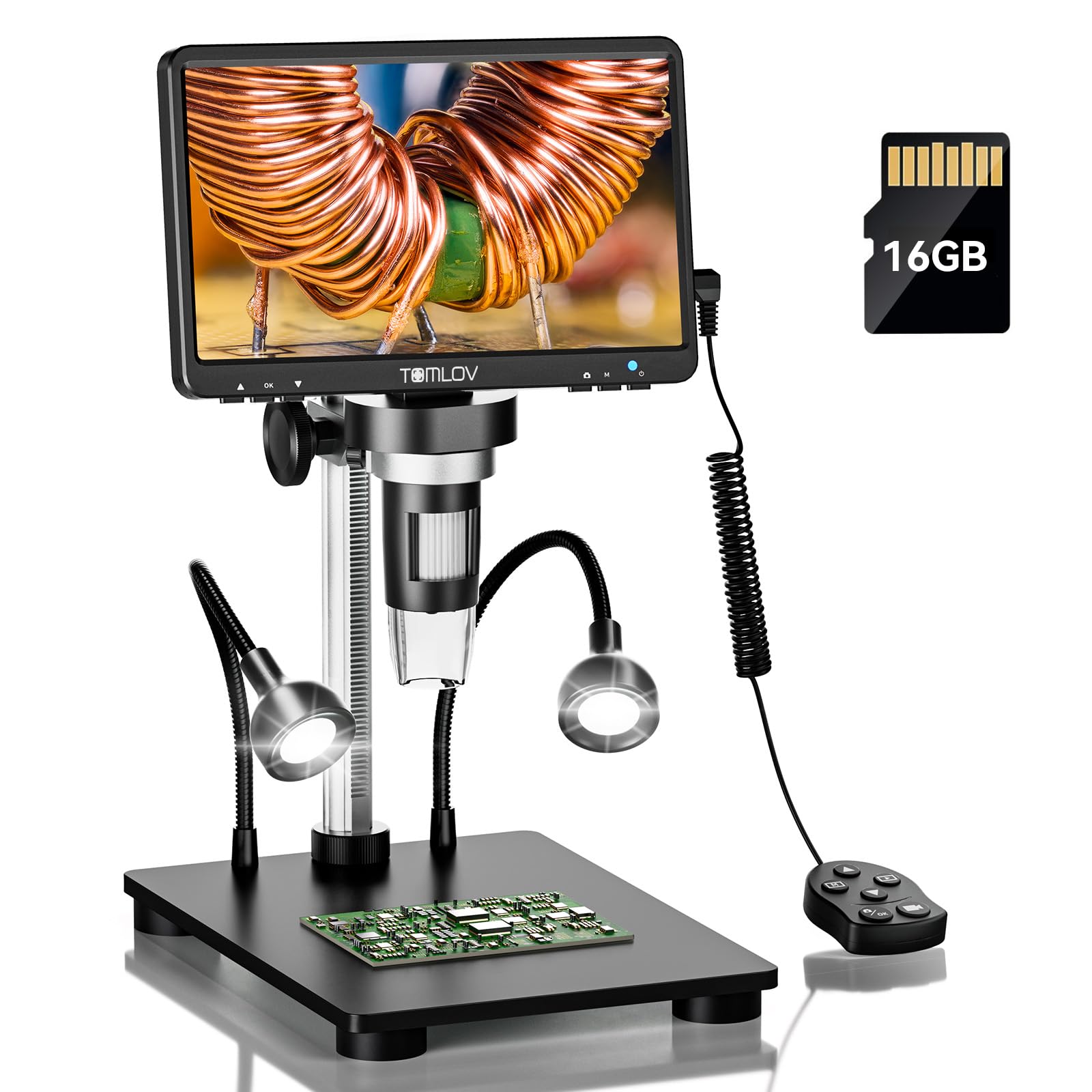
- The screen rotates 90 degrees for a more ergonomic viewing angle.
- Magnification ranges from 5X to 1200X, with 8 LED fill lights and 2 additional gooseneck lights.
- An included Micro SD card can store photos and videos.
Best Gift For: An adult or student interested in inspecting coins, rocks, stamps, or small electronic work.
SmartMax My First Dinosaurs STEM Set
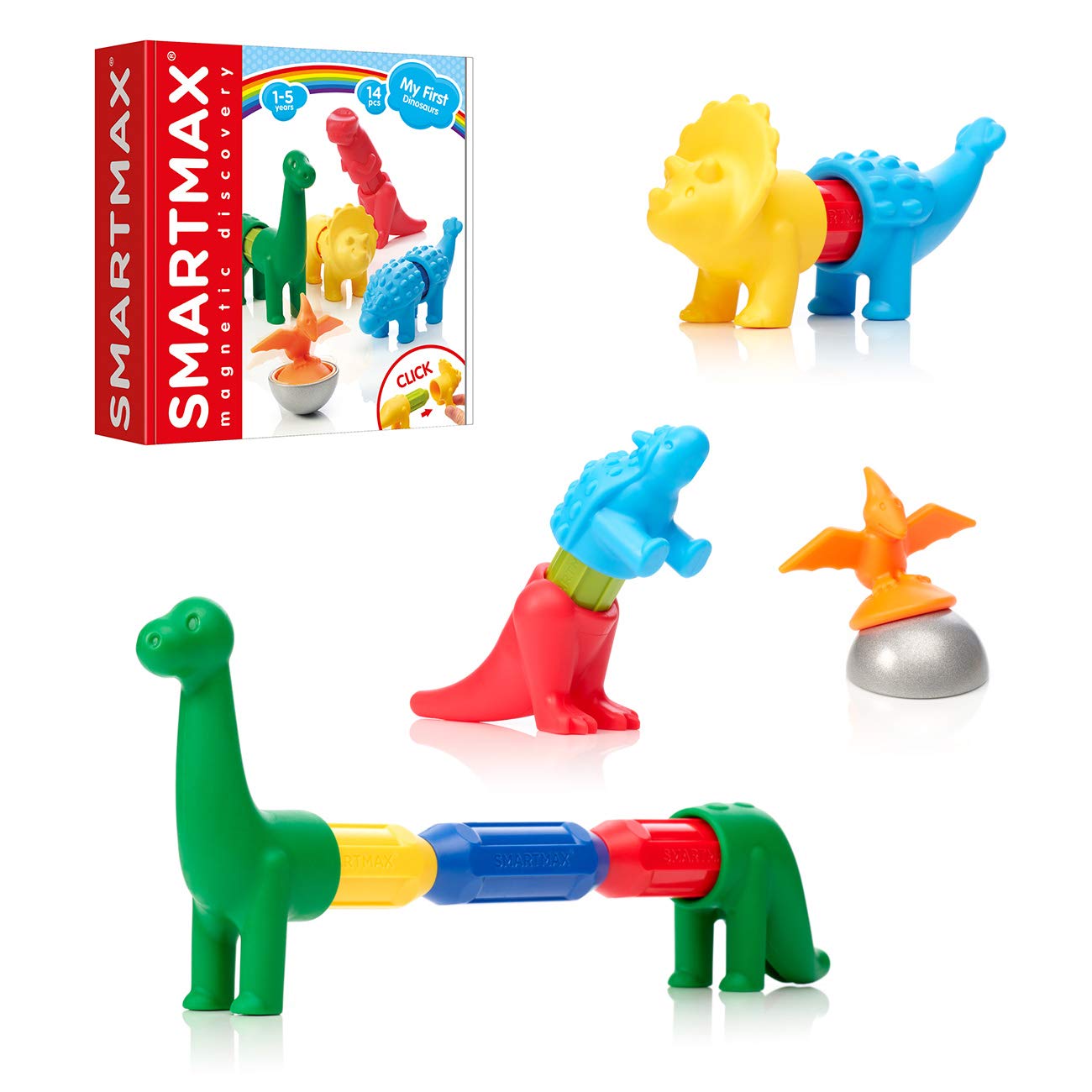
- Build dinosaur figures including a T-Rex, Triceratops, and Stegosaurus.
- The set includes colorful magnetic bars and soft dinosaur pieces.
- SmartMax sets can be combined to expand building play.
Best Gift For: A young child beginning to explore building and early STEM ideas through dinosaur play.
Learning Resources 1-2-3 Build It Robot Factory

- Children can make their own imaginative robot creations.
- Building activities are designed to develop early engineering and critical thinking.
- The pieces are designed for little hands to handle.
Best Gift For: A toddler ready to build imaginative robot creations and explore early engineering ideas.
Whitelines Graph Notebooks, 3-Pack

- The pack contains three spiral notebooks with graph paper.
- The paper has a light gray tint designed to be less tiring on the eyes than white paper.
- The app removes the paper background from scans, leaving writing or drawings on white.
Best Gift For: A student or science enthusiast who likes recording observations, sketches, or calculations on graph paper.
Glocusent 3-Color, 6-Brightness Neck Reading Light

- Choose from three color temperature modes, with three brightness levels on each light head.
- Flexible arms can be adjusted to a comfortable angle around the neck.
- The rechargeable light provides up to 80 hours for general reading with a single head.
Best Gift For: A science reader who enjoys hands-free reading or close-up repair work.
Choosing Christmas gifts for science lovers
Start with the recipient’s age, attention span, and favorite way to explore. A younger child may get more from an activity they can build or watch unfold, while an older learner may prefer tools for observing, documenting, or following a personal interest.
Think about where the gift will be used. A project that needs a place to sit and work may suit a family activity, while a light or notebook can fit more naturally into an existing reading or study routine.
For Christmas gifts for science lovers, match the experience to the person rather than choosing by topic alone. A dinosaur fan might enjoy magnetic building, while someone who collects small objects could value magnified viewing and image capture.
Balance the gift with your budget
A modest gift can still feel thoughtful when it suits the recipient. Building toys, notebooks, and reading accessories offer approachable ways to support curiosity; a digital microscope is a larger, more involved option for someone likely to use its viewing features often.
Decide whether you want a complete activity or a useful companion for an existing interest. A kit may provide a ready-made project, while a notebook or reading light can support many future experiments, classes, or evenings with a science book.
Check actual prices before buying, since they can change. Also consider whether the recipient already has compatible materials or accessories, and whether the gift requires anything extra to make the intended activity possible.
Personalize the experience
For Christmas gifts for science lovers, a small personal touch can connect the present to what the recipient already wonders about. Add a handwritten note suggesting a question to investigate, such as how a crystal forms or what details appear on a coin under magnification.
You can also pair a gift with a low-cost activity that does not depend on unverified product capabilities: a sketchbook page for observations, a family building session, or time set aside to read together. Let the recipient choose the pace and direction.
Presentation can make practical gifts feel more inviting. Wrap a notebook with a note about recording discoveries, or place a child’s building set alongside a card naming a first robot or dinosaur to create.
Keep add-ons simple and age-appropriate.
Make a thoughtful choice for different ages
A science gift should fit the recipient’s stage and interests. For little children, look for activities that invite hands-on participation and can be enjoyed with an adult nearby.
Older learners may appreciate options that support a hobby, school project, collecting, or careful observation.
If you are unsure, ask a parent or the recipient about interests, age suitability, available space, and what they already own. For electronics or accessories, confirm device compatibility before ordering; for anything meant to be used at a desk, check dimensions and available room.
Avoid assuming that every science fan wants a complex project. Some people prefer a quiet reading companion or a place to organize ideas.
A gift that supports their ordinary routine can be more welcome than one that creates a new obligation.
Last-minute Christmas gifts for science lovers
When time is short, choose something whose purpose is immediately clear and whose details are easy to verify. A notebook or reading light can work for an established routine, while an age-appropriate building or growing activity offers a defined project for curious kids.
Before ordering, review the current product details, including dimensions, compatibility, included components, and any additional items needed. Check the latest delivery estimate for your address rather than assuming a gift will arrive by a particular date.
If delivery timing is uncertain, make the moment personal with a printed note describing the gift you chose and why it fits. You can still celebrate curiosity on the day, then share the physical gift when it arrives.