The best memory card readers depend on the cards you use, the ports on your devices, and whether you need quick transfers or a way to view files on the go. These picks range from compact SD and microSD adapters to a broad-format hub and an outdoor viewer, so match compatibility and connection type to your setup.
Quick Top Products
SABRENT USB-C & USB-A Card Reader (CR-BCA2)
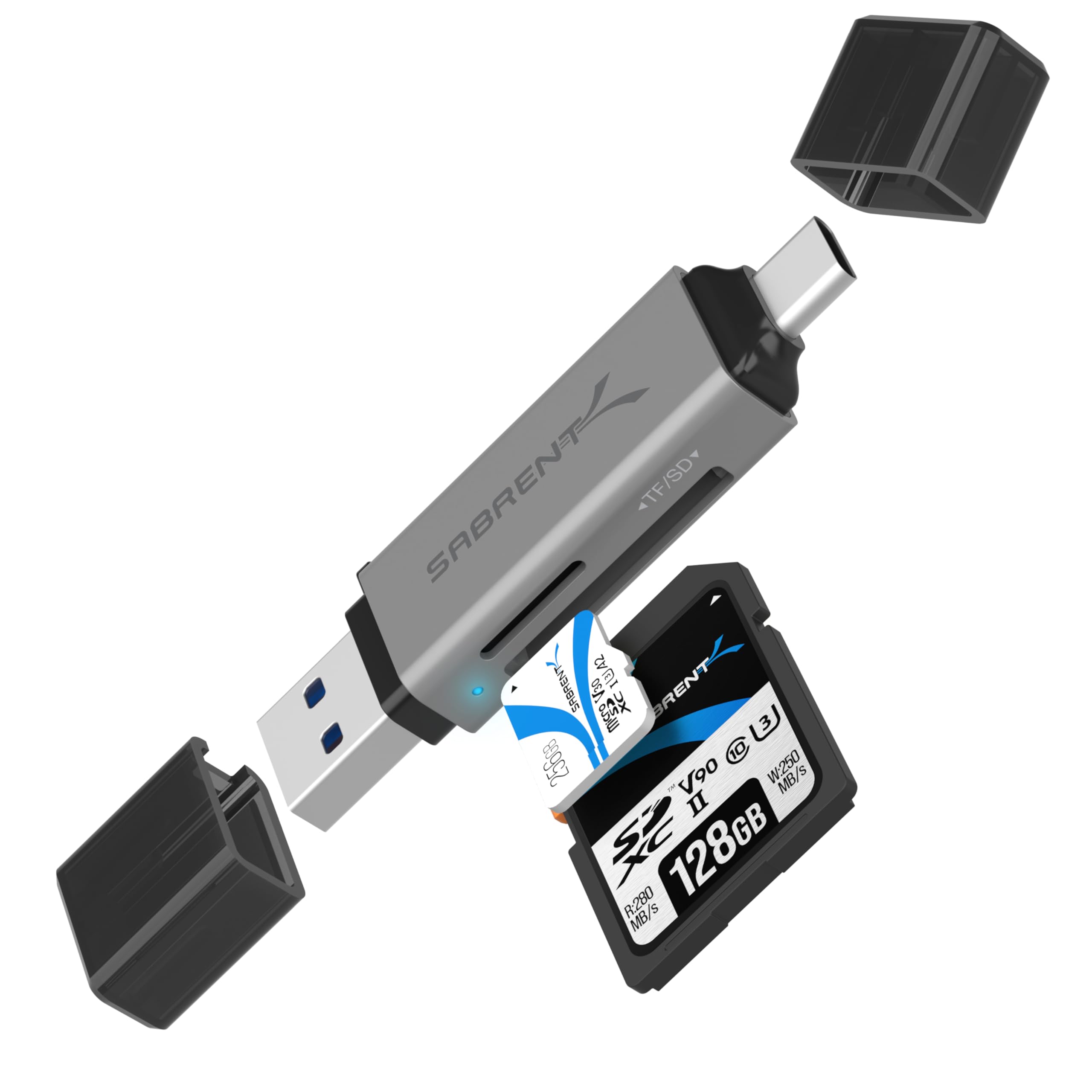
- USB-C and USB-A connectors cover newer and traditional ports.
- Dual slots read SD and microSD card families.
- Plug-and-play USB 3.0 supports transfers up to 5Gbps.
Best For: People who move SD and microSD files between USB-C and USB-A devices.

SABRENT USB-C UHS-II Card Reader (CR-CSDM)
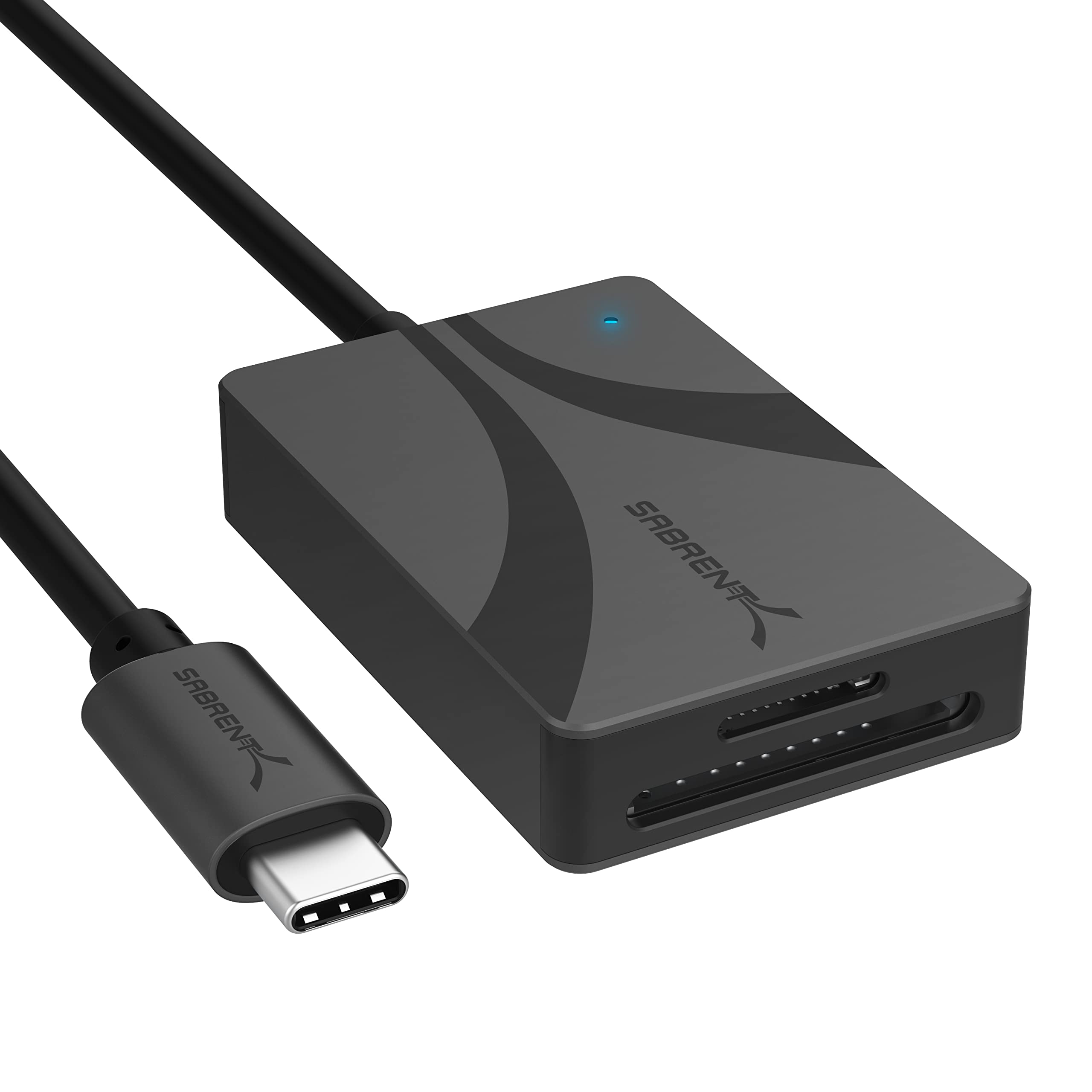
- Supports UHS-II SDXC and microSDXC cards.
- The integrated USB-C cable is 6 inches long.
- It can transfer through both slots simultaneously.
Best For: Photographers transferring SD and microSD media to a modern USB-C computer.
SMALLRIG SD/TF USB 4.0 Reader 4870
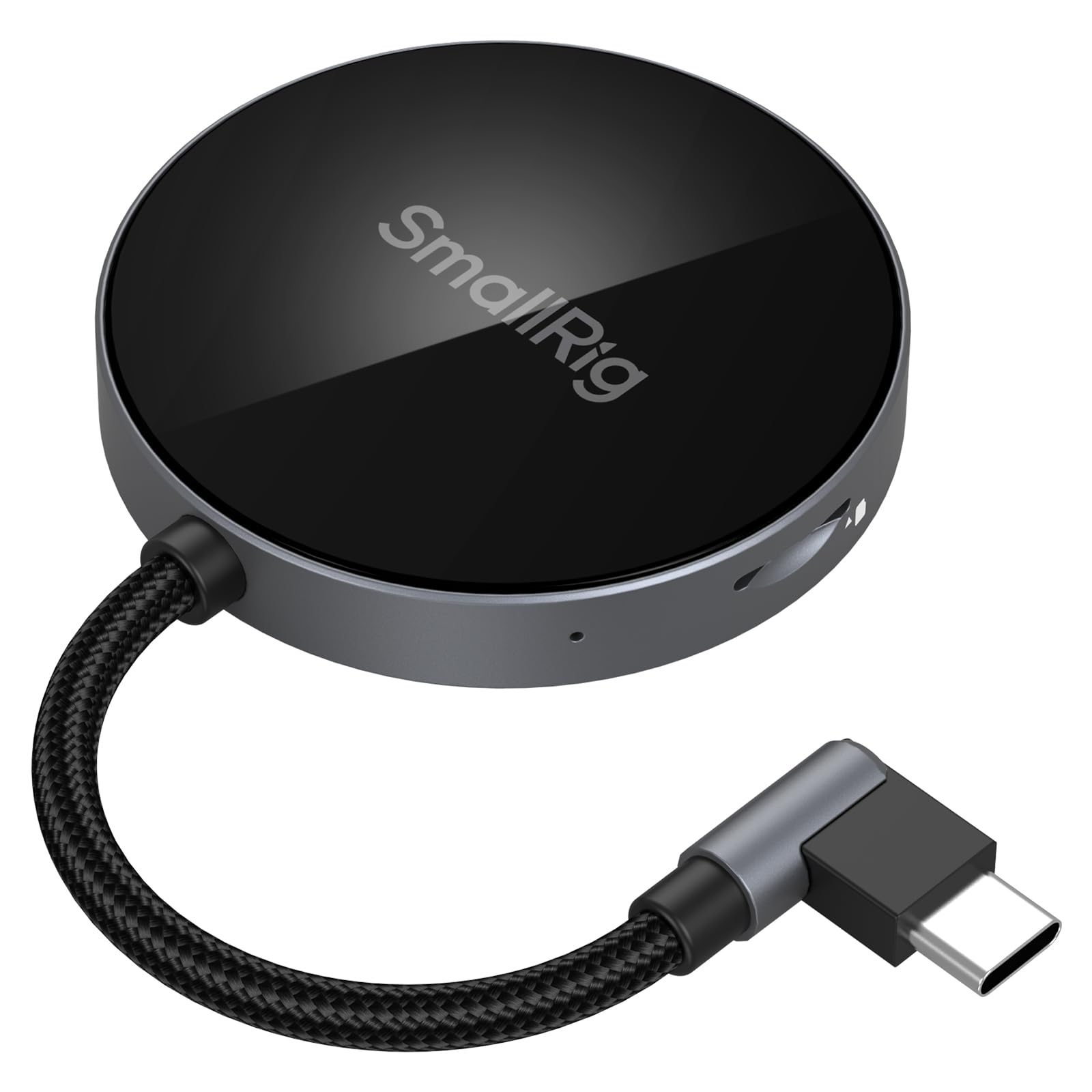
- Two slots support SD and TF card families.
- A 90-degree elbow connector helps keep the plug angled.
- The built-in magnet attaches to compatible phone backs.
Best For: Mobile users who want a compact angled connection and a reader that attaches magnetically to compatible phones.
SABRENT SuperSpeed 2-Slot USB 3.0 Reader (CR-UMSS)
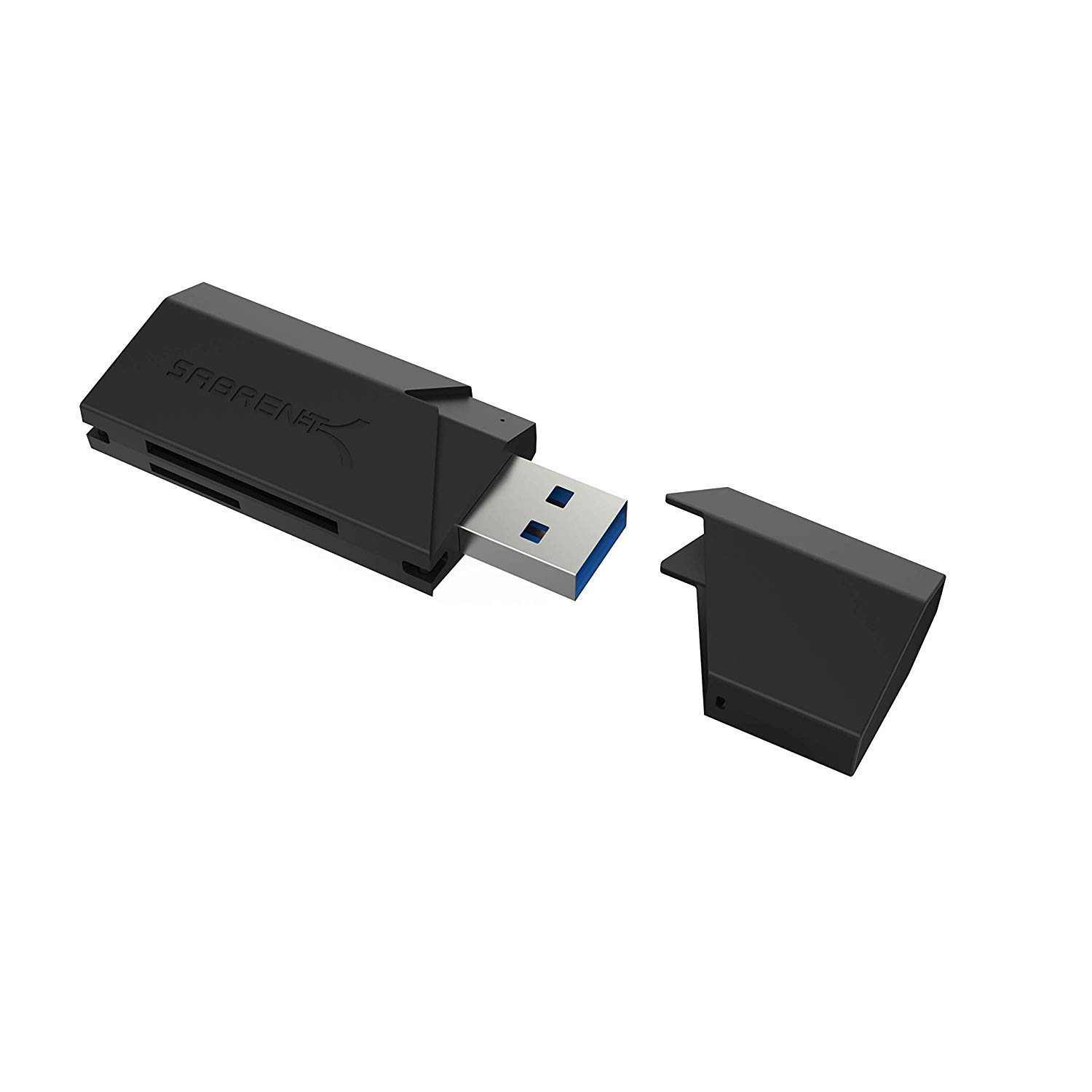
- Supports SD, SDHC, SDXC, MMC, microSD, and T-Flash.
- USB 3.0 is backward compatible with USB 2.0 hosts.
- It is powered through USB and needs no additional power supply.
Best For: People who want a straightforward USB-A reader for SD, MMC, and microSD-family cards.
SABRENT USB 3.0 SD and microSD Reader (CR-BYMS)
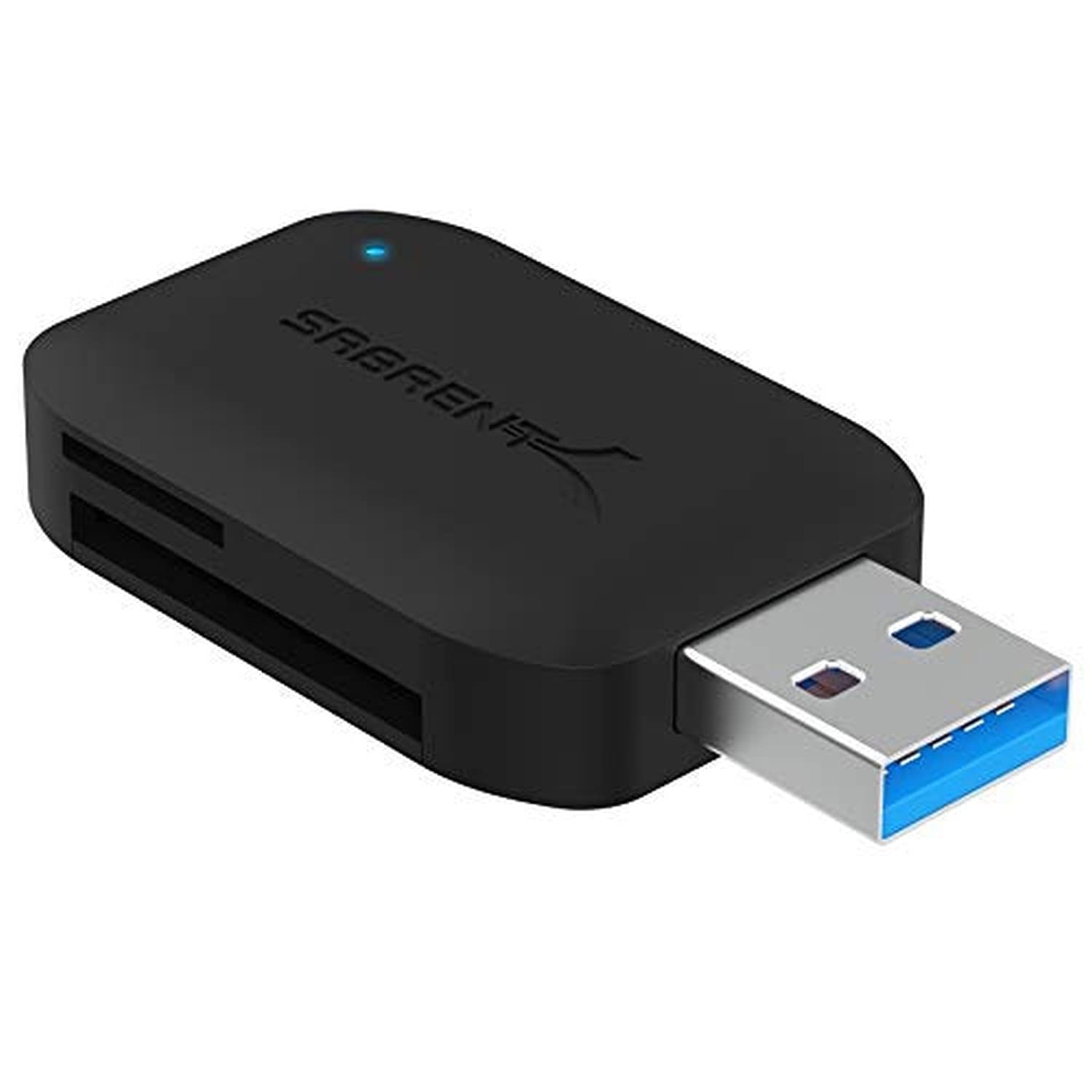
- It can read two cards simultaneously.
- Supports SD and microSD card families, including UHS-I.
- USB 3.0 transfer is listed up to 5Gbps.
Best For: Users who want to read SD and microSD cards at the same time from a USB 3.0 host.
SABRENT 75-in-1 Flash Media Reader/Writer (CRW-UINB)
- The reader supports 74 different types of memory cards.
- Six slots support formats including CompactFlash and Memory Stick.
- It includes one USB 2.0 port.
Best For: Desktop users with a mixed collection of legacy and current memory cards.
Muddy CRV3 HD SD Card Viewer
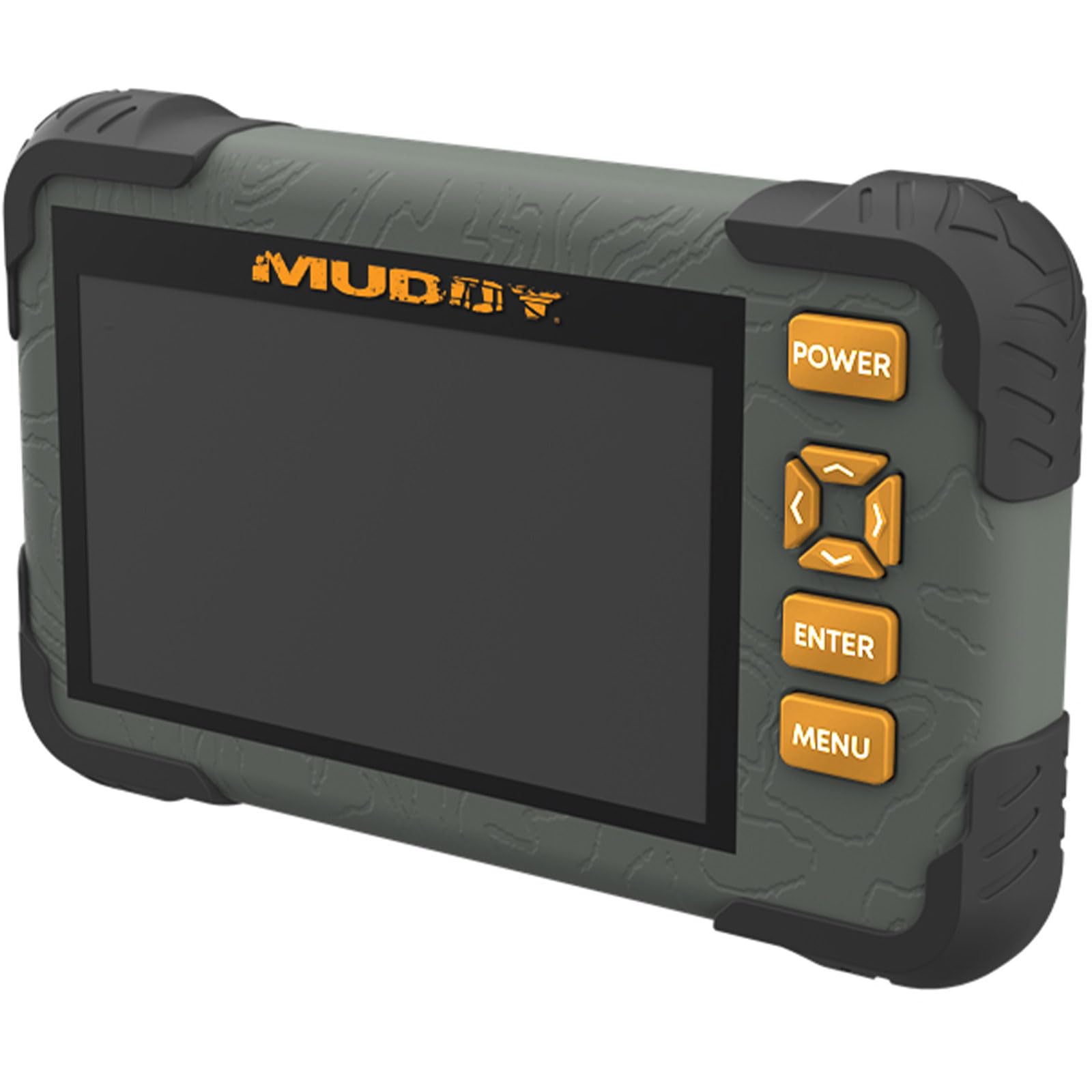
- It has a 4.3-inch color LCD screen.
- 1080p video playback is supported.
- The SD card slot supports cards up to 32GB.
Best For: Hunters who want to review supported SD card photos and video on an integrated screen outdoors.
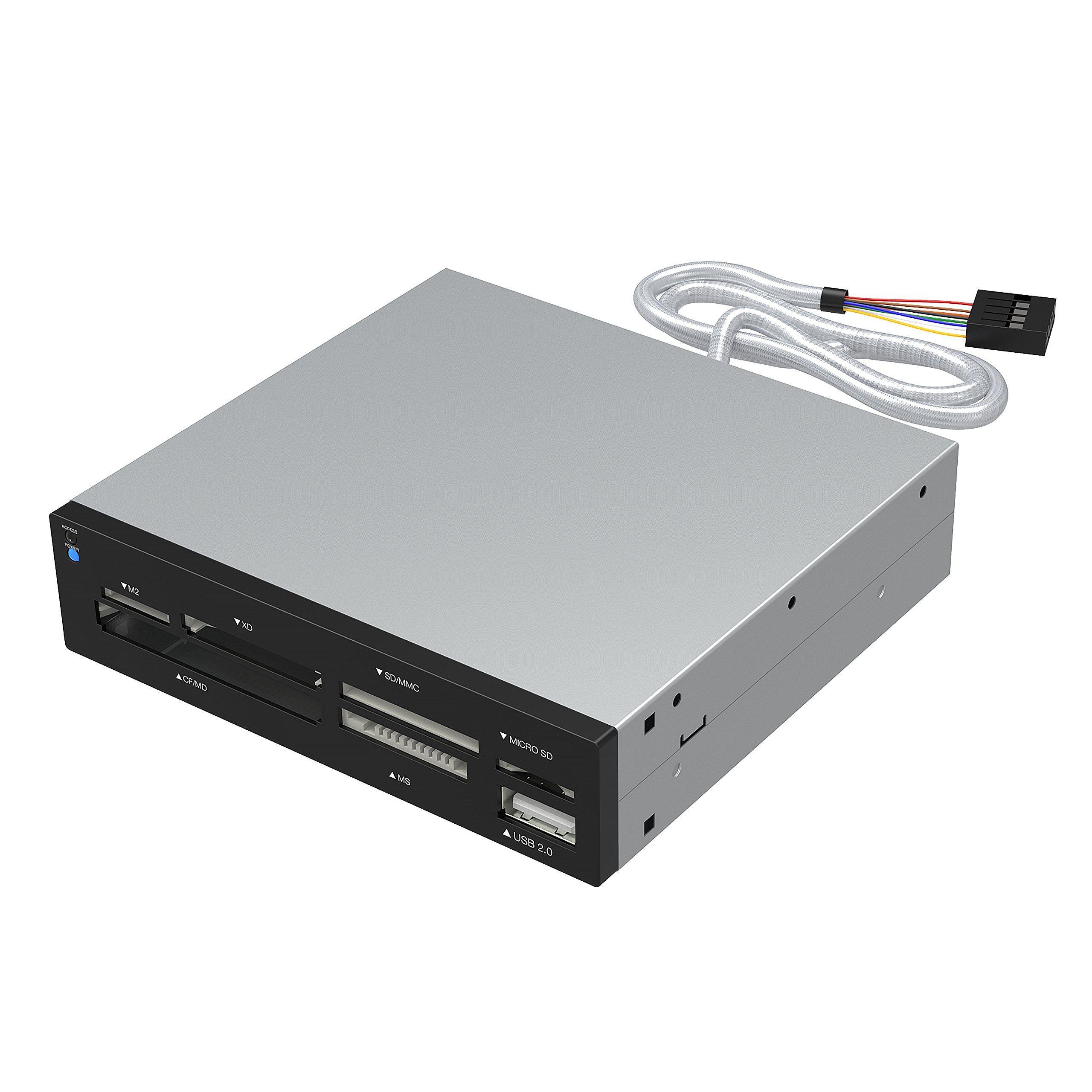
SABRENT 74-in-1 Internal Reader/Writer (CR-USNT)
- It is a 3.5-inch internal card reader/writer.
- Six slots support formats including CF/MD and MS.
- It includes a USB 2.0 port.
Best For: Desktop builders who want a 3.5-inch internal reader for multiple card formats and a USB port.
USB-C and USB-A Flexibility
SABRENT SD Card Reader USB C & USB A, Micro SD Card Reader, USB 3.0 Dual Slot Memory Card Adapter for Laptop PC Android (CR-BCA2)
This SABRENT reader combines USB-C and USB-A connectors with separate SD and microSD slots, making it a practical choice when your computers and mobile devices use different ports. Its USB 3.0 interface supports transfers up to 5Gbps and works with USB 2.0 devices as well.
Plug-and-play operation avoids a driver setup, and the built-in LED shows activity. It supports Windows, macOS, and compatible Android devices.
The main tradeoff is its focused card selection: it covers SD and microSD families rather than the broader assortment found in multi-format readers. Check your device's port and Android compatibility before buying.
Best For: People who move SD and microSD files between USB-C and USB-A devices.
| Pros | Cons |
|---|---|
|
|
Choose this reader if you regularly switch between USB-C and USB-A hosts and use SD or microSD cards. Its port flexibility and activity LED are useful for a laptop bag or camera kit.
Before buying, check that the device has the connector you need and that Android compatibility applies to your device. If your collection includes less common formats, compare it with a multi-format hub that supports a wider range of card types.
Cable-Equipped UHS-II Transfers
SABRENT USB Type-C Card Reader, Dual-Slot UHS-II SDXC and microSDXC SD 4.0 (CR-CSDM)
This SABRENT dual-slot reader supports UHS-II SDXC and microSDXC cards, with transfer speeds up to 312MBps. It can transfer through both slots simultaneously and includes an integrated 6-inch USB 3.2 Gen 1 Type-C cable, so the reader does not need a separate cable.
The USB connection supports up to 5Gbps to the host, with older connection versions supported where compatible. It is bus-powered and plug-and-play on Windows 8+ and macOS 12+.
Its main limitation is the USB-C connection and narrow focus on SD and microSD formats; confirm your host and card requirements first.
Best For: Photographers transferring SD and microSD media to a modern USB-C computer.
| Pros | Cons |
|---|---|
|
|
This is a strong fit for a USB-C workflow built around UHS-II SD or microSD cards, especially when simultaneous access to both slots matters. The integrated cable and bus-powered design keep the setup simple.
Check that your host runs a supported operating system and has USB-C; this is not a broad-format hub. The advertised card speed is an upper limit, so actual transfer rates also depend on the card and host.
Angled Reader for Mobile Setups
SMALLRIG SD/TF Dual-Slot Card Reader USB 4.0 312MB/s - 4870
The SMALLRIG 4870 combines SD and TF slots with a 90-degree angled USB Type-C connector and a built-in magnet for compatible phone backs. Its listed compatibility spans Windows, Mac, Linux, Android, and HarmonyOS, along with many named phones, tablets, and computers.
The reader supports SD and microSD family cards, and its 312MB/s transfer figure is presented for USB 4.0. The angled plug can help manage a connection in a mobile setup, while the magnetic attachment is aimed at hands-free use.
Verify both your device and operating-system behavior; Android transfers may need the file manager allowed to run in the background.
Best For: Mobile users who want a compact angled connection and a reader that attaches magnetically to compatible phones.
| Pros | Cons |
|---|---|
|
|
Consider this SMALLRIG if you want a reader that can attach to a compatible phone and prefer an angled connection for handheld or tablet work. Its mobile compatibility is a key differentiator, though the many device models make a compatibility check worthwhile.
Confirm that your card format is supported and remember the transfer figure is tied to USB 4.0; a slower host or card will constrain transfers. Android users should also review the background-process note.
Simple USB-A Multi-Format Reader
SABRENT SuperSpeed 2 Slot USB 3.0 Flash Memory Card Reader for Windows, Mac, Linux, and Certain Android Systems Supports SD, SDHC, SDXC, MMC/MicroSD, T Flash [Black] (CR-UMSS)
This SABRENT two-slot USB 3.0 reader covers SD, SDHC, SDXC, MMC, microSD, and T-Flash cards. It is powered by the USB port, needs no separate power supply, and uses plug-and-play operation without installation.
USB 2.0 hosts are supported as well. Its simple format coverage makes it a basic option for a computer setup that already has a compatible USB connection.
The title lists Windows, Mac, Linux, and certain Android systems, so check your particular host before purchase. It does not offer the USB-C and USB-A connector combination found on another SABRENT reader in this roundup.
Best For: People who want a straightforward USB-A reader for SD, MMC, and microSD-family cards.
| Pros | Cons |
|---|---|
|
|
Pick this reader for a simple computer-based setup that uses SD, MMC, or microSD-family cards and a compatible USB port. Its USB-powered, plug-and-play design keeps the setup uncomplicated.
It is less flexible for switching between USB-C and USB-A devices than the CR-BCA2, and Android support is qualified rather than universal. Check your host's connector and operating-system compatibility before relying on it for a mobile workflow.
Compact Dual-Card Access
SABRENT USB 3.0 Micro SD and SD Card Reader (CR-BYMS)
The SABRENT CR-BYMS is a two-slot reader for SD and microSD families, including UHS-I cards. It supports reading two cards simultaneously and connects over USB 3.0, with stated data transfer up to 5Gbps.
The connection is backward compatible with USB 2.0 and 1.1, and an LED indicates power and activity. Its plug-and-play approach avoids a driver CD, making it convenient for a basic computer transfer task.
The product details name Windows and Mac OS X compatibility. They do not identify a connector type or dimensions, so check the connection shown for the offer and confirm it suits your host.
Best For: Users who want to read SD and microSD cards at the same time from a USB 3.0 host.
| Pros | Cons |
|---|---|
|
|
This reader fits users who want simultaneous SD and microSD card access and use a Windows or Mac computer. The USB 3.0 interface and backward compatibility make it adaptable to older hosts, though actual speed depends on the host and card.
Before buying, confirm the physical connector and whether it fits your computer, since the details here do not identify the connector arrangement. For broader device-port flexibility, the USB-C and USB-A CR-BCA2 is a clearer option.
Broad-Format Desktop Hub
SABRENT 75 in 1 Multi Flash Media Card Reader/Writer(with Power Cord) (CRW-UINB)
This SABRENT reader is aimed at a desk setup with cards beyond the usual SD and microSD types. Its six slots cover formats including M2, xD, SD, MMC, microSD, CompactFlash, MD, and Memory Stick, with some cards requiring an adapter.
It also includes a USB 2.0 port and an internal power connector intended to provide sufficient power to external USB devices. Operating-system support includes older Windows versions, Linux, and Mac OS X.
Because its connection is USB 2.0 and some formats need adapters, check your card types and computer setup before choosing it for frequent large transfers.
Best For: Desktop users with a mixed collection of legacy and current memory cards.
| Pros | Cons |
|---|---|
|
|
Choose the CRW-UINB when your card collection includes older or less common formats that a compact SD/microSD reader does not cover. Its six slots and USB 2.0 port make it more of a desk hub than a pocket transfer adapter.
Check whether your particular cards need adapters, and consider whether USB 2.0 meets your transfer needs. For a simpler camera-card workflow, one of the USB readers is more focused.
On-Site Viewing With LCD
Muddy CRV3 HD SD Card Viewer - Durable Water-Resistant Hunting Outdoor SD Card Reader/Viewer with 4.3" LCD Screen & Headphone Jack for Audio - Supports up to 32GB
The Muddy CRV3 is a card viewer rather than a conventional computer-focused reader. It has a 4.3-inch color LCD, supports 1080p video playback, and includes a headphone jack for audio.
An intuitive menu and SD card slot make it suited to reviewing footage or images on site without relying on a computer screen. Its support is limited to SD cards up to 32GB, which is a meaningful constraint for buyers with larger cards or microSD media.
The title calls the unit water-resistant and durable, but does not give a rating or protection level. Check card capacity and the specific weather protection needed for your use.
Best For: Hunters who want to review supported SD card photos and video on an integrated screen outdoors.
| Pros | Cons |
|---|---|
|
|
This is the specialized choice for someone who wants to view media in the field, especially when a built-in screen and headphone jack are more useful than computer connectivity. Its SD capacity limit is important: check that your cards are supported and no larger than the stated maximum.
The title describes water resistance but provides no rating, so verify the protection level needed for outdoor conditions. For routine transfers to a computer, choose a standard card reader instead.
Internal Desktop Bay Reader
SABRENT 74 in 1 3.5 Inch Internal Flash Media Card Reader/Writer with USB Port (CR-USNT)
This SABRENT 74-in-1 reader is designed for a computer's 3.5-inch internal bay, making it distinct from the standalone USB readers in this guide. It provides six slots for a wide selection of formats, including M2, xD, SD, MMC, microSD, CompactFlash, MD, and Memory Stick; some cards may require an adapter.
It also adds a USB 2.0 port and an internal power connector for the hub. The notes list operating-system support from older Windows versions through Windows 8, along with Linux and Mac OS X.
Confirm your case has a suitable bay and check support for your current system before buying.
Best For: Desktop builders who want a 3.5-inch internal reader for multiple card formats and a USB port.
| Pros | Cons |
|---|---|
|
|
Choose this model only if you are outfitting a desktop with a compatible 3.5-inch bay and want multiple card formats accessible from the front of the case. It provides broader format coverage than the portable USB readers, but requires an internal installation and uses a USB 2.0 port.
Check your case layout, motherboard or hub connection needs, and operating-system compatibility. If you want a reader to carry between computers, the external SABRENT options are easier to match to that use.
How to Choose Memory Card Readers
How We Picked Memory Card Readers
These picks cover different jobs within the memory card reader category: everyday SD and microSD transfers, mixed USB-C and USB-A setups, mobile use, broad card-format collections, desktop installation, and field viewing. We favored products whose supported card families and connection approach were clear enough to match to a recognizable use case.
A reader's card compatibility matters first. SD, SDHC, and SDXC are related but distinct formats, and microSD support does not automatically cover every less common card type.
The Sabrent 75-in-1 readers list formats such as CompactFlash and Memory Stick, while the smaller adapters focus on SD and microSD. The Muddy CRV3 is a separate kind of tool: it displays media on its own screen and accepts SD cards up to 32GB.
Comparing Memory Card Readers
Connection type separates several options. The Sabrent CR-BCA2 offers both USB-C and USB-A plugs, while the UHS-II CR-CSDM includes a short integrated USB-C cable.
The SMALLRIG 4870 targets mobile setups with an angled USB-C connector and magnetic attachment for compatible phones. The CR-UMSS and CR-BYMS provide straightforward USB 3.0 access, though confirm the physical connector for the CR-BYMS before purchase.
Transfer figures need context. The USB 3.0 readers list host rates up to 5Gbps, while the CR-CSDM lists card speeds up to 312MBps for supported UHS-II media.
The SMALLRIG gives a 312MB/s figure with USB 4.0. These are not interchangeable guarantees: the host port, card, and connection all affect actual transfer speed.
For occasional file access, slot compatibility and a convenient connector may matter more than the highest listed ceiling.
| Product | Standout features | Best for |
|---|---|---|
| SABRENT USB-C & USB-A Card Reader (CR-BCA2)Check Price |
| People who move SD and microSD files between USB-C and USB-A devices. |
| SABRENT USB-C UHS-II Card Reader (CR-CSDM)Check Price |
| Photographers transferring SD and microSD media to a modern USB-C computer. |
| SMALLRIG SD/TF USB 4.0 Reader 4870Check Price |
| Mobile users who want a compact angled connection and a reader that attaches magnetically to compatible phones. |
| SABRENT SuperSpeed 2-Slot USB 3.0 Reader (CR-UMSS)Check Price |
| People who want a straightforward USB-A reader for SD, MMC, and microSD-family cards. |
| SABRENT USB 3.0 SD and microSD Reader (CR-BYMS)Check Price |
| Users who want to read SD and microSD cards at the same time from a USB 3.0 host. |
| SABRENT 75-in-1 Flash Media Reader/Writer (CRW-UINB)Check Price |
| Desktop users with a mixed collection of legacy and current memory cards. |
| Muddy CRV3 HD SD Card ViewerCheck Price |
| Hunters who want to review supported SD card photos and video on an integrated screen outdoors. |
| SABRENT 74-in-1 Internal Reader/Writer (CR-USNT)Check Price |
| Desktop builders who want a 3.5-inch internal reader for multiple card formats and a USB port. |
Choosing a Reader for Your Cards and Devices
If your cards are mostly SD or microSD, a compact dual-slot adapter keeps the choice simple. Choose the CR-BCA2 when your devices use both USB-C and USB-A.
The CR-CSDM is more targeted to UHS-II cards and comes with its own USB-C cable, while the CR-BYMS can read two cards simultaneously and supports UHS-I. Check operating-system compatibility as well as the port: the CR-BYMS names Windows and Mac OS X, and the CR-CSDM names Windows 8+ and macOS 12+.
A varied archive of older media points toward the desktop-style Sabrent readers. The external 75-in-1 hub lists six slots and a USB 2.0 port; some cards may require adapters.
The CR-USNT is an internal 3.5-inch model, so it suits a desktop with the right bay rather than a portable kit. Confirm the exact formats you need and any adapter requirement before choosing either one.
Portable Transfer or Field Viewing?
For phone and tablet transfers, the SMALLRIG 4870 lists support for multiple mobile platforms and named devices, but check your exact model. Its notes also advise allowing the file manager to run in the background on Android to avoid interrupted transfers.
The USB-C and USB-A CR-BCA2 is a more general bridge between computer ports and compatible Android devices.
The Muddy CRV3 serves a different purpose. Its LCD, 1080p playback, and headphone jack support viewing on site, but it is limited to SD cards up to 32GB.
Its water-resistant description has no protection rating specified, so verify that detail if outdoor exposure is a concern. A standard reader is the better match when the goal is moving files onto a computer rather than watching them on the device.
Who Should Buy Which Memory Card Reader?
Choose the CR-BCA2 for mixed USB-C and USB-A devices and common SD or microSD cards. Consider the CR-CSDM for UHS-II SD or microSD transfers over USB-C, or the SMALLRIG when magnetic phone attachment and an angled connection suit your mobile workflow.
The CR-UMSS and CR-BYMS are focused everyday options for common card formats; verify the CR-BYMS connector before ordering.
For unusual legacy formats, compare the external 75-in-1 reader with the internal CR-USNT according to whether you want a separate hub or a desktop bay installation. Choose the Muddy CRV3 when on-device viewing is the priority and your SD cards meet its capacity limit.
In every case, match the card type, host connector, and operating-system support before buying.